
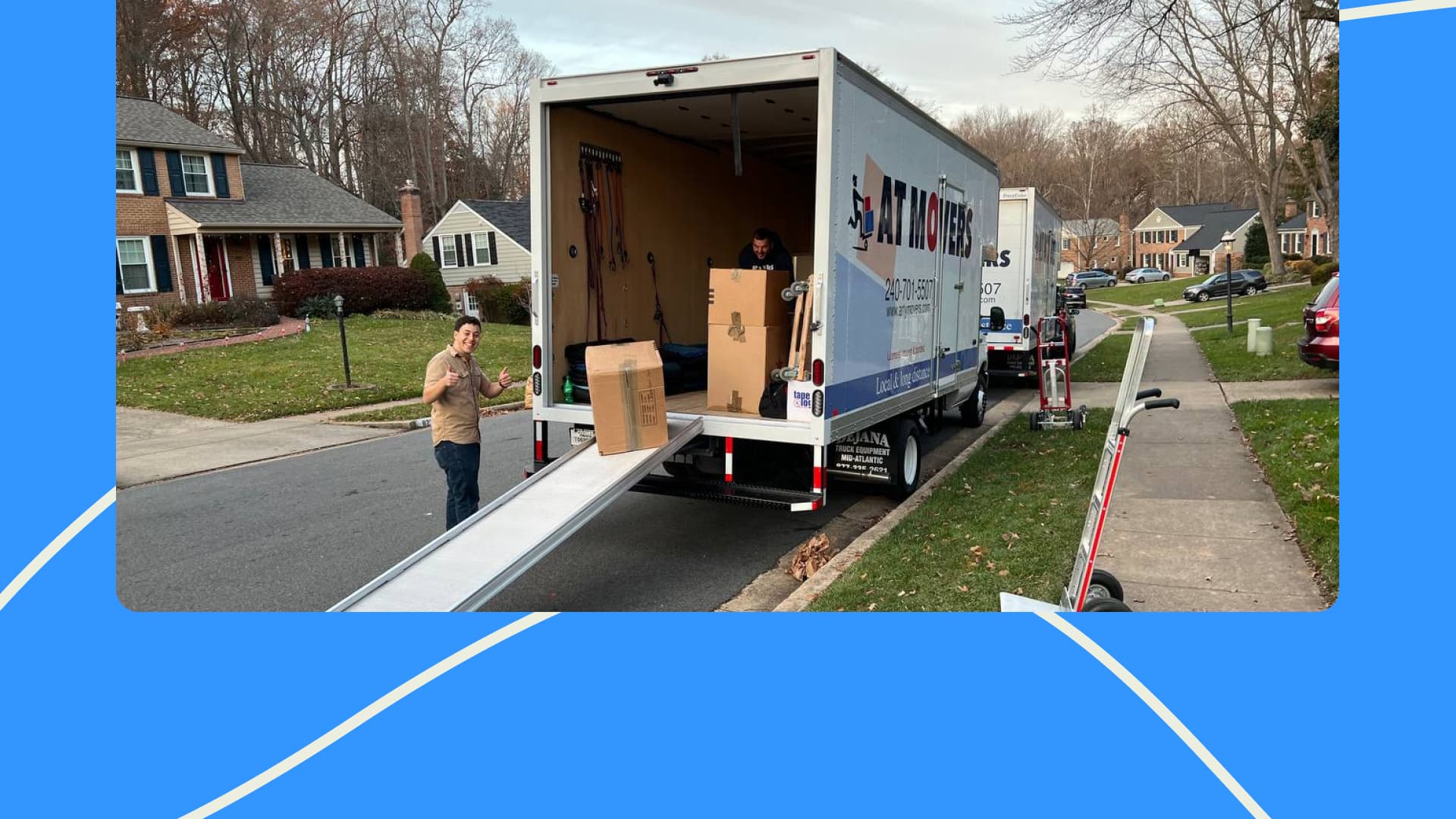

Moving in Washington DC may be a difficult process. A seamless move depends on knowing the price of movers and what is included in the rate. We have collected all the information to help you understand the pricing in the nation’s capital.
How Much Do Movers Cost in Washington, D.C. in 2026?
In 2026, DC movers usually cost $150–$220 per hour with AT Movers, depending on crew size. A small studio or one-bedroom move often starts around $300–$900, a two-bedroom apartment usually falls around $720–$1,440, and larger row-house or single-family moves can run $1,100–$2,200+ before packing, storage, stairs, overweight items, parking permits, or building fees.
Moving Cost Calculator
Estimate your Washington, DC moving cost
Use this calculator to estimate your local moving cost in Washington, D.C. based on home size, crew size, estimated hours, packing help, stairs, storage, and building access. The result is a planning range, not a final estimate.
Most local Washington, D.C. moving companies charge by the hour for local moves. AT Movers’ published pricing lists crew packages at $150/hour for 2 movers and a truck, $180/hour for 3 movers and a truck, and $220/hour for 4 movers and a truck. Use these numbers as a budgeting starting point, not a fixed final price, because the total depends on inventory, access, stairs, elevators, parking, packing, and move date.
Use hourly rates as a planning baseline, not a final price
Local Washington, D.C. moves are usually priced by crew size and time. Final cost still depends on inventory, building access, parking, stairs, packing needs, and move date.
For market context, Extra Space Storage’s Washington, DC moving cost guide lists local professional mover costs from about $200 to $4,000 depending on home size, while MoveAdvisor’s 2026 Washington, D.C. guide shows higher average totals for larger homes. AT Movers’ final price should still be based on the actual inventory and access conditions for your move.
| Move size | Typical crew | Estimated labor time | Estimated AT Movers cost |
|---|---|---|---|
| Room or small studio | 2 movers + truck | 2–3 hours | $300–$450+ |
| Studio apartment | 2 movers + truck | 2–4 hours | $300–$600+ |
| One-bedroom apartment | 2 movers + truck | 3–5 hours | $450–$750+ |
| Two-bedroom apartment | 3 movers + truck | 4–8 hours | $720–$1,440+ |
| Three-bedroom row house or townhouse | 4 movers + truck | 5–8 hours | $1,100–$1,760+ |
| Four-bedroom home | 4 movers + truck | 7–10 hours | $1,540–$2,200+ |
These examples do not include packing materials, storage, unusually heavy items, piano or safe handling, extra stair fees, credit card processing fees, building fees, or parking-permit costs. If your building needs elevator reservation paperwork, a loading dock time slot, or a certificate of insurance, confirm that before move day.
DC-specific costs that can change the final price
Truck access can change the final moving time
Washington, D.C. moves often cost more when the truck cannot park close to the building, the address has a narrow street, the elevator must be reserved, or the property requires loading-dock paperwork.
If curb space needs to be reserved, start with the DDOT TOPS system before move day. Parking problems can add time because the crew may have a longer carry from the truck to the apartment or house.
- Apartment and condo moves: ask the building about elevator reservations, loading dock hours, certificate of insurance requirements, and move-in fees.
- Row houses and townhomes: check whether the truck can legally stop near the entrance and whether stairs, narrow halls, or tight turns will slow the move.
- Downtown and high-density areas: plan around loading-zone limits, traffic, and meter availability.
- Interstate moves: verify the mover’s registration through the FMCSA registered mover search before booking a long-distance move.
What’s Included in the Hourly Rate of Moving in Washington, D.C.?
AT Movers’ hourly rate is built around the moving crew and truck. According to the AT Movers pricing page, the standard crew packages include movers, a truck, loading and unloading, basic disassembly and assembly, protective tools and padding, hand trucks, dollies, and insurance coverage.
| Usually included | May cost extra |
|---|---|
| Movers and moving truck | Packing materials such as boxes, tape, paper, and specialty protection |
| Loading and unloading | Full packing service if you want movers to pack before loading |
| Basic furniture disassembly and assembly | Overweight items, pianos, safes, or complex specialty items |
| Moving blankets, padding, dollies, and hand trucks | Extra stair fees, long carries, or difficult building access |
| Basic coverage | Storage fees, building fees, parking permits, or card processing fees |
The safest way to compare moving prices is to check what is included in the hourly rate, what is charged separately, and whether the company adds travel time, minimum hours, deposit rules, rescheduling fees, or card payment fees.
Moving Days to Avoid Overpaying
Cheapest day to hire movers: In most cases, the cheapest moving days are weekdays in the middle of the month, especially outside the busy May–September season. Weekends, month-end dates, holidays, and last-minute bookings are usually harder to schedule and may cost more.
Choosing the right moving day can save you money:
- End and Start of the Month: These are typically busy days, leading to higher rates.
- Weekends: More people move on weekends, so rates may be higher.
- Holidays: Moving during major holidays can also be more expensive.
Scheduling your move during weekdays or mid-month can lead to savings, so sometimes it’s better to take an extra day off and save on moving.
Packing and Moving Cost
Packing is usually billed like moving labor because it uses the same crew time. At AT Movers’ 2026 2-mover rate, a one-bedroom packing job that takes 3–4 hours would usually be about $450–$600 in labor before boxes, tape, packing paper, wardrobe boxes, mattress bags, or specialty protection are added.
- Labor: packing time is usually charged at the hourly moving rate for the crew size needed.
- Materials: boxes, tape, packing paper, shrink wrap, and specialty materials may be separate from labor.
- Fragile items: glass, artwork, lamps, dishes, antiques, and electronics may need more time and stronger materials.
- Best way to save: pack non-fragile items yourself and leave only fragile, oversized, or hard-to-protect items for the movers.
Cost of Moving and Storage
If you need moving and storage in Washington, D.C., the total price usually has two parts: the moving labor to pick up and deliver your items, plus the monthly storage charge. Do not assume storage is included in the moving hourly rate unless it is written into the estimate.
Do not assume storage is included in the moving hourly rate unless it is written into the estimate. Ask for pickup cost, monthly storage cost, and final delivery cost as separate numbers.
For a moving and storage estimate in DC, ask for three numbers separately:
- Pickup cost: crew, truck, travel time, stairs, elevator access, and packing if needed.
- Monthly storage cost: based on how much space your items need and how long they stay in storage.
- Final delivery cost: the labor and truck time needed to bring items from storage to the new address.
This is especially important for apartment moves, delayed closings, lease gaps, renovation delays, and long-distance moves where delivery timing is not fixed yet.
Long-Distance Moving from Washington, D.C. Cost
Long-distance moving from Washington, D.C. is usually priced as a flat-rate estimate, not a simple local hourly move. The price depends on inventory, distance, delivery timing, packing, storage, specialty items, and access at both addresses.
For interstate moves, confirm the mover through the FMCSA registered mover search before booking. Long-distance moving from Washington, D.C. is usually priced from inventory, distance, delivery timing, packing, storage, specialty items, and access at both addresses.
For market context, MoveAdvisor’s 2026 Washington, D.C. moving cost guide lists long-distance examples from D.C. to New York City at roughly $1,480–$3,650 for a one-bedroom move, while larger moves and farther routes can cost much more. AT Movers should price long-distance moves from the actual inventory and access details, not from a generic mileage chart alone.
Regulation check: for interstate moves, confirm the mover through the FMCSA registered mover search.
Distance: longer routes usually cost more, but delivery schedule and shipment size also matter.
Inventory size: more furniture, boxes, fragile items, or heavy items increase labor and truck space.
Packing: full packing, fragile packing, and specialty protection can raise the final price.
Delivery timing: faster or more specific delivery windows may cost more than flexible delivery.
A real estimate needs inventory and access details
Hourly ranges are useful for planning. The final number depends on what is being moved, where the truck can park, building rules, stairs, elevators, packing, and heavy items.
Frequently Asked Questions (FAQs)
In 2026, AT Movers’ local DC moving rates are $150/hour for 2 movers and a truck, $180/hour for 3 movers and a truck, and $220/hour for 4 movers and a truck. A small local move may start around $300–$600, while a larger apartment, row house, or single-family move can cost $1,100–$2,200+ before add-ons.
A one-bedroom apartment move in Washington, D.C. often needs 2 movers and takes about 3–5 hours. With AT Movers’ 2-mover rate, that usually puts labor around $450–$750+ before packing materials, storage, stairs, parking issues, or building fees.
A two-bedroom apartment in DC often needs 3 movers and about 4–8 hours, depending on inventory, elevator access, stairs, and truck parking. With AT Movers’ 3-mover rate, a realistic budget is about $720–$1,440+ before add-ons.
The hourly rate generally includes the moving crew, truck, loading, unloading, basic furniture disassembly and assembly, moving blankets, padding, dollies, hand trucks, and basic coverage. Packing materials, storage, overweight items, stairs above the included level, and some payment or rescheduling fees may be separate.
They can. Stairs, long carries, elevator restrictions, loading dock rules, reserved parking, and difficult truck access can increase the final time or add separate fees. Ask your building about elevator reservations, certificate of insurance requirements, loading windows, and move-in rules before scheduling the move.
Move on a weekday, avoid the end of the month, reduce inventory before move day, pack non-fragile items yourself, reserve parking early when needed, and make sure the movers know about stairs, elevators, long carries, and heavy items before the estimate is prepared.
Moving in Washington, D.C., requires understanding various factors that contribute to the cost. From the type of move to the choice of moving day and additional services like packing and storage, being informed can help you make the right decisions for a smooth and affordable relocation. Always consult with local moving companies in the D.C. area for accurate and tailored information.


